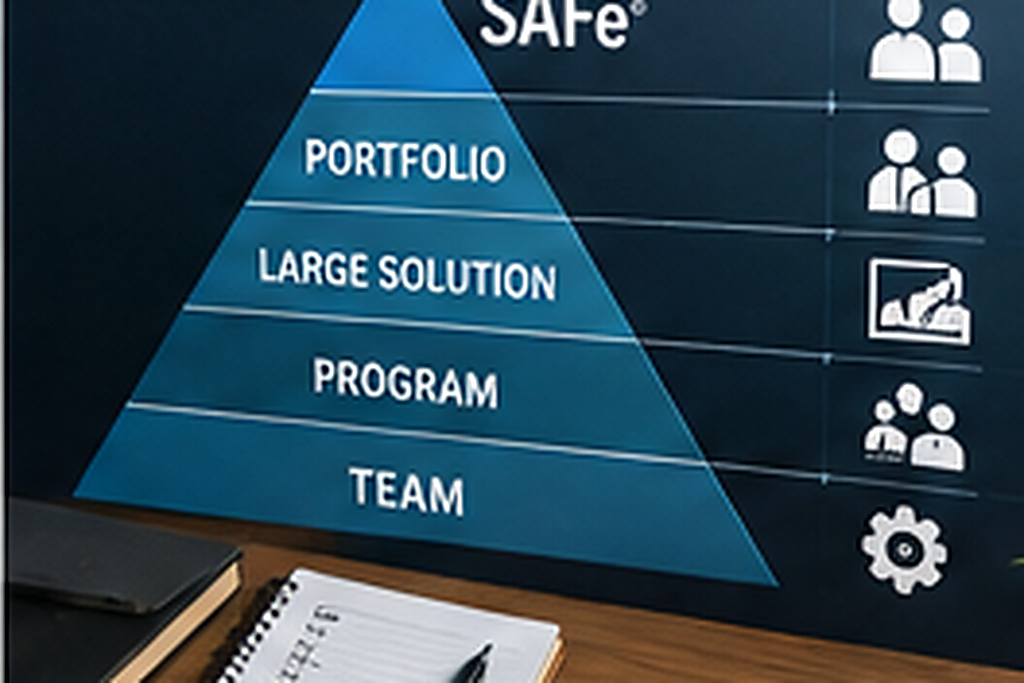


Scaled Agile Framework (SAFe) Program Specialist Certification introduces the concepts used to coordinate agile delivery beyond a single team. The course starts with the need for scaling agile and the core principles associated with SAFe, including the benefits and practical considerations of applying the framework in larger delivery environments. Learners then examine Program Increments, how they are planned, executed and monitored, and the roles that support coordinated delivery.
The later module broadens the focus to agile transformation and Lean Portfolio Management. Topics include value stream mapping, agile budgeting, success metrics and practices for sustaining transformation. The source curriculum also includes topic-level assessments that reinforce selected concepts. This course is suitable for professionals who work across multiple teams, programmes or transformation initiatives and want a structured understanding of SAFe-related concepts. The course title is preserved from the source, but no certification outcome or credential is guaranteed.
Scale agile delivery through SAFe principles, program increments and lean governance
This opening module welcomes learners and establishes the starting point for the course. It introduces the learning journey before the curriculum moves into the specialised concepts and practices covered in the remaining modules. The module provides orientation so learners can approach later topics with a clear sense of progression.
This module develops a structured understanding of understanding safe principles. Learners begin with Introduction to SAFe Principles and The Need for Scaling Agile, then extend the discussion through Core SAFe Principles Explained. The module also addresses Benefits of Adopting SAFe and Real-world SAFe Implementations, helping learners connect the topics into a practical view of the decisions and practices involved.
This module focuses on executing program increments through the source-defined topics of Understanding Program Increments, Planning Effective PIs and Executing and Monitoring PIs. Learners then examine Roles and Responsibilities and Feedback and Improvement, with the remaining topics reinforcing the same learning theme. The sequence builds a coherent view of the concepts and their professional relevance.
This module explores leading agile transformations in a progressive sequence. It covers Introduction to Lean Portfolio Management, Value Stream Mapping and Budgeting in an Agile Environment, then moves into Metrics for Success and Sustaining Agile Transformations. Together, the topics help learners understand the methods, roles or decision points associated with this part of the course and relate them to structured professional practice.
This final summary module consolidates the major ideas developed throughout the course. It closes the learning sequence after the modules on Understanding SAFe Principles and related applied topics. Learners can use the summary to review how the course concepts connect before completing the learning journey.