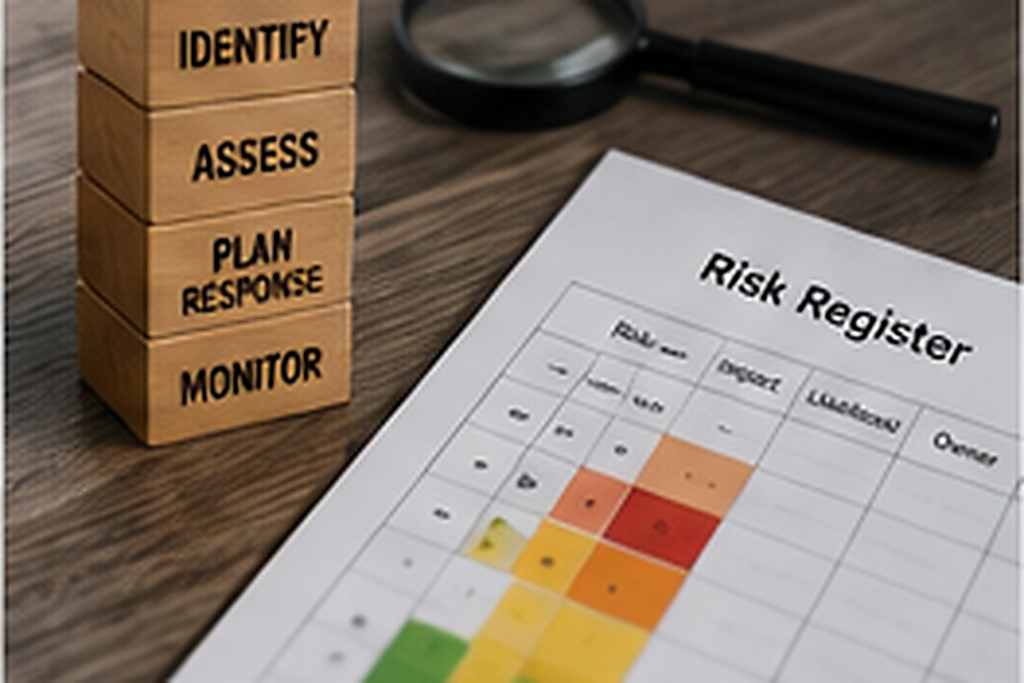

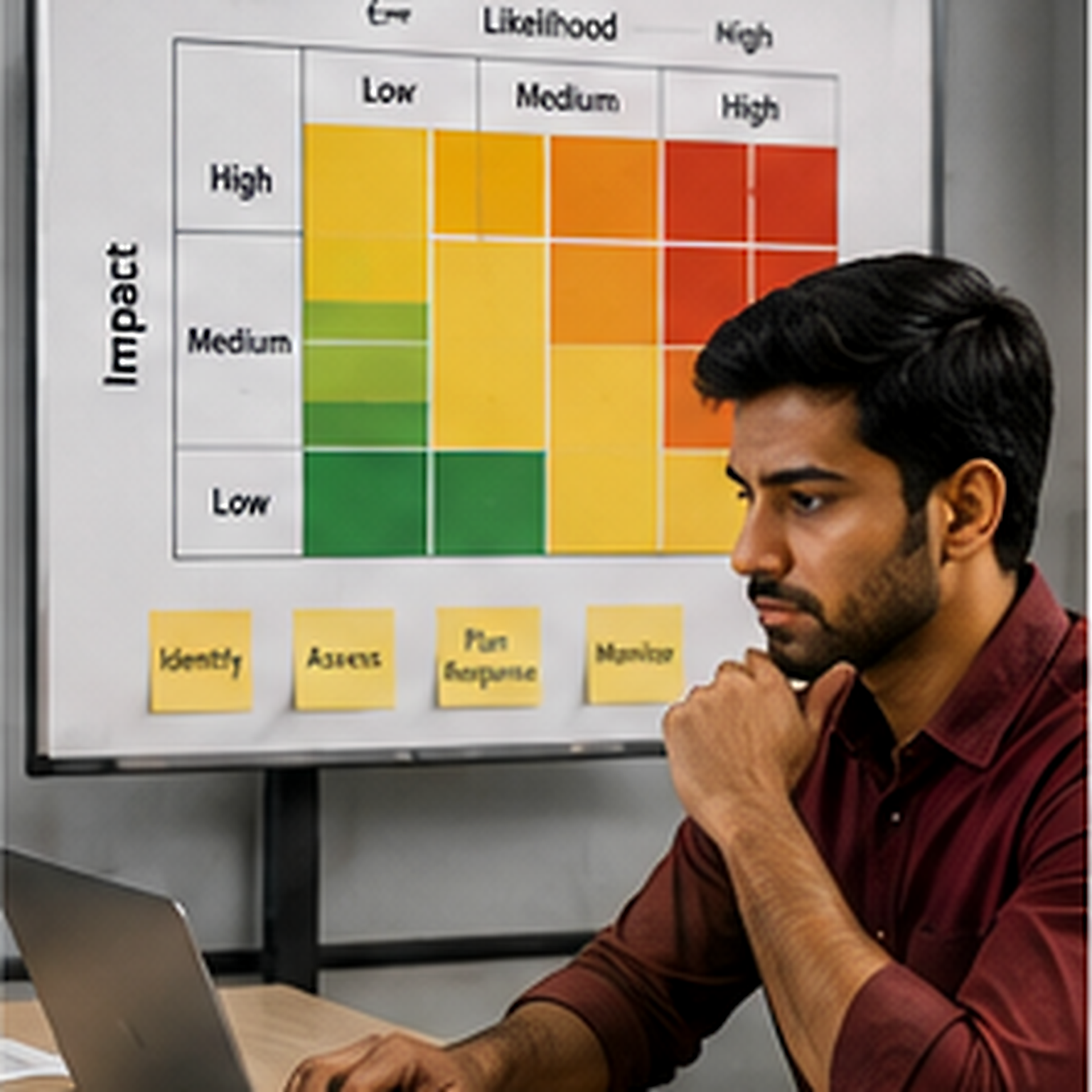
Risk Management in Project Planning develops a structured approach to recognising and responding to uncertainty before and during project delivery. The course begins with risk culture, exploring how organisational influence and mindset affect the way risks are discussed, identified and acted upon. Learners also examine case studies and assessment tools that can help evaluate the strength of a risk-aware culture.
The curriculum then moves into practical risk identification through brainstorming, fishbone analysis, SWOT, checklists and historical data. The final substantive module focuses on strategic responses: understanding response options, integrating them into plans, communicating actions and monitoring risks over time. This progression connects organisational behaviour with practical project techniques so that risk management is treated as an ongoing planning discipline rather than a one-time checklist. The course is relevant to project managers, planners, coordinators and team leads who contribute to risk discussions and project decision-making.
Build proactive project risk thinking from culture to response planning
This opening module welcomes learners and establishes the starting point for the course. It introduces the learning journey before the curriculum moves into the specialised concepts and practices covered in the remaining modules. The module provides orientation so learners can approach later topics with a clear sense of progression.
This module develops a structured understanding of understanding risk culture. Learners begin with Defining Risk Culture and Organisational Influence, then extend the discussion through Fostering Proactive Mindset. The module also addresses Case Studies Analysis and Tools for Risk Culture Assessment, helping learners connect the topics into a practical view of the decisions and practices involved.
This module focuses on risk identification techniques through the source-defined topics of Understanding Risk Identification, Brainstorming Techniques and Fishbone Diagram Method. Learners then examine SWOT Analysis for Risks and Checklists and Historical Data, with the remaining topics reinforcing the same learning theme. The sequence builds a coherent view of the concepts and their professional relevance.
This module explores strategic risk responses in a progressive sequence. It covers Understanding Risk Response Strategies, Types of Risk Responses and Integrating Responses into Plans, then moves into Communicating Risk Responses and Monitoring and Reviewing Risks. Together, the topics help learners understand the methods, roles or decision points associated with this part of the course and relate them to structured professional practice.
This final summary module consolidates the major ideas developed throughout the course. It closes the learning sequence after the modules on Understanding Risk Culture and related applied topics. Learners can use the summary to review how the course concepts connect before completing the learning journey.