
Lorem ipsum dolor sit amet, consectetur adipiscing elit. Ut elit tellus, luctus nec ullamcorper mattis, pulvinar dapibus leo.
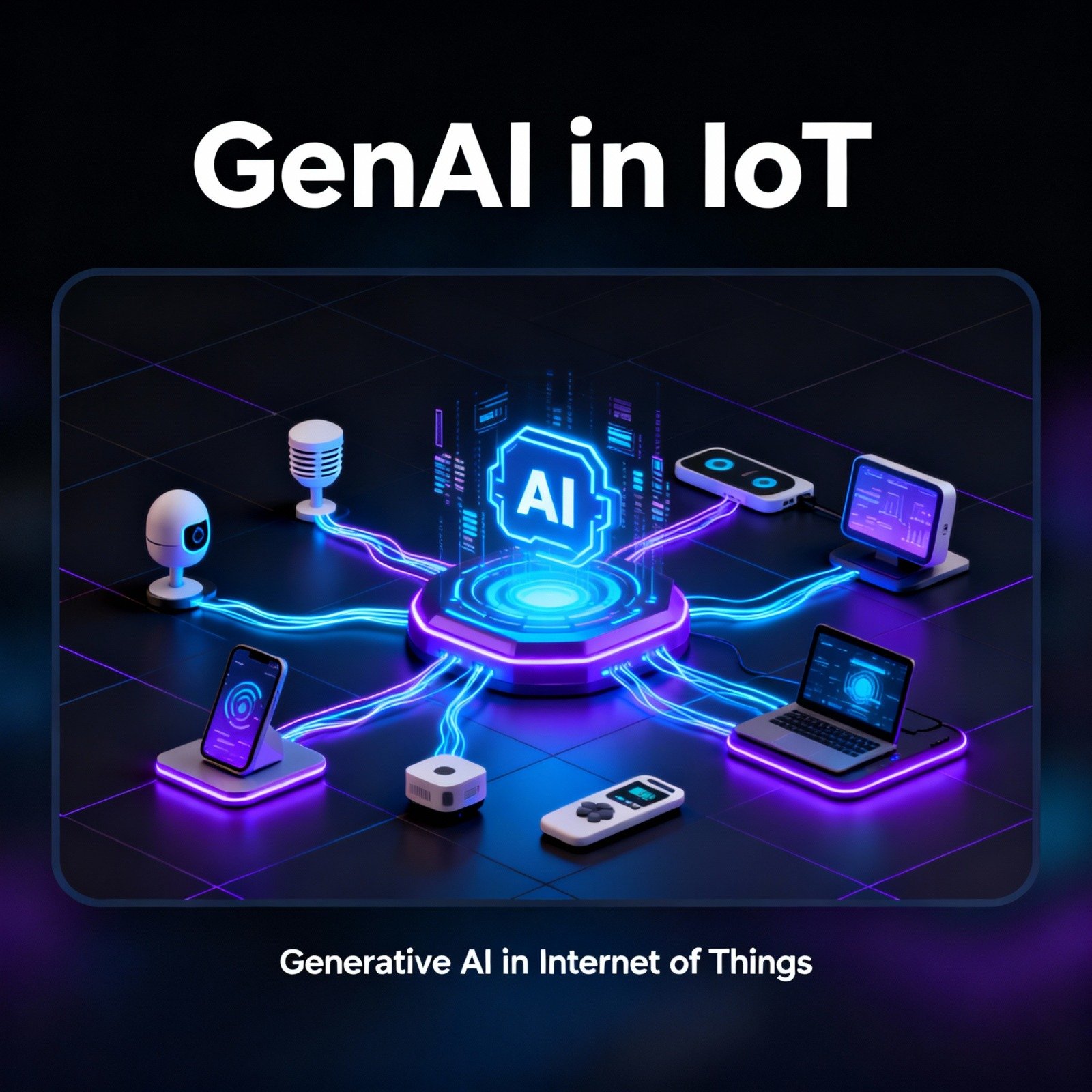
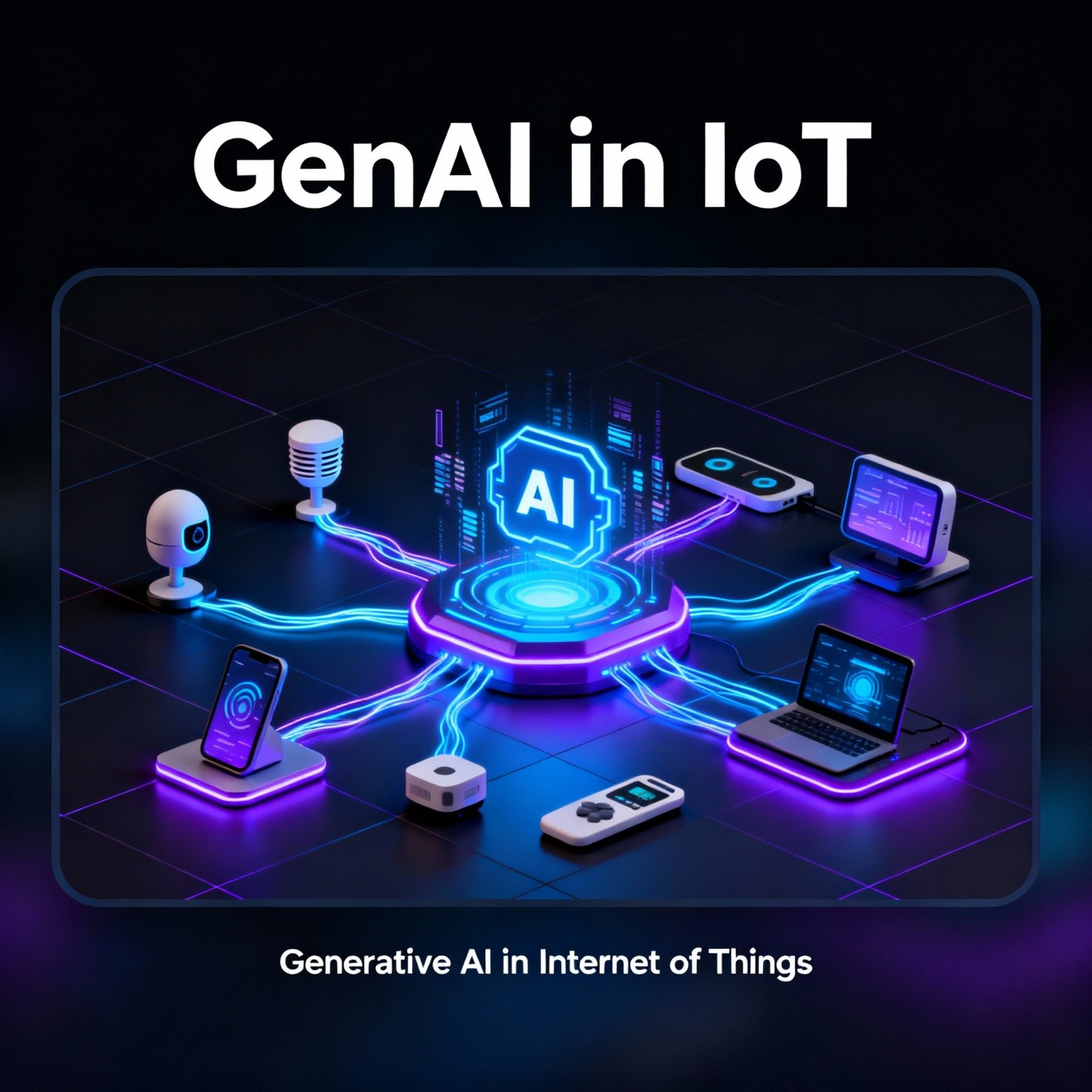
The Generative AI in IoT course helps learners understand how AI is transforming connected devices, smart systems, automation, and intelligent infrastructure. Today, IoT systems generate large volumes of real-time data, and Generative AI can help convert that data into useful insights, predictions, and automated actions. Therefore, practical GenAI skills are becoming important for future-ready IoT roles.
Through this course, learners explore how Generative AI can support IoT data cleaning, sensor data analysis, edge AI, predictive maintenance, digital twins, smart applications, anomaly detection, and IoT security. In addition, the course connects AI concepts with real IoT use cases across smart homes, smart cities, healthcare, agriculture, manufacturing, and automation.
Moreover, learners understand both the opportunities and responsibilities of using AI in connected systems. As a result, participants become better prepared to design, manage, and support AI-powered IoT ecosystems responsibly.
By completing this Generative AI in IoT course, learners will understand how AI can improve connected intelligence, real-time decision-making, automation, and smart system performance.
Overall, this course helps learners connect, predict, innovate, and power the future with Generative AI and IoT.
Connect. Predict. Innovate - Power the Future with Generative AI and IoT.
The Generative AI in IoT curriculum is divided into nine practical learning sections. Each section helps learners understand how Generative AI, IoT, edge intelligence, smart automation, security, and connected systems work together.
In addition, the course begins with GenAI fundamentals and gradually moves toward IoT data processing, smart systems, digital twins, security, and future-ready connected intelligence. As a result, learners build both conceptual clarity and practical AI-IoT skills.
This section introduces Generative AI and explains why it has become important across industries. It also helps learners understand the history, limitations, and ethical concerns connected with AI adoption.
As a result, learners build a strong foundation before moving into advanced AI applications in IoT and connected systems.
Large Language Models are central to many modern GenAI applications. Therefore, this section explains how models such as GPT, BERT, T5, and PaLM work behind the scenes.
In addition, learners understand how LLMs can be used responsibly in IoT documentation, automation support, data interpretation, and intelligent system workflows.
This section introduces popular AI tools and platforms used across professional domains. Instead of focusing only on theory, learners understand how different tools support productivity, automation, experimentation, and connected intelligence.
Moreover, this section helps learners choose suitable GenAI tools for IoT workflows, smart applications, simulation, documentation, and productivity.
Prompt engineering helps professionals get better results from AI tools. This section focuses on writing clear prompts, designing useful IoT-related tasks, and reducing weak or misleading outputs.
Consequently, learners become more confident in using AI tools for IoT documentation, automation planning, data explanation, coding support, and smart system problem-solving.
AI must be used with responsibility, fairness, and professional judgment. Therefore, this section explores the ethical and legal boundaries of Generative AI.
Furthermore, learners understand why privacy, safety, transparency, and ethical decision-making are especially important in AI-powered IoT systems.
Generative AI can improve workplace productivity when used correctly. This section explains how professionals can use AI as a practical assistant for communication, documentation, and collaboration.
As a result, learners understand how AI can support everyday work before applying it to advanced IoT, automation, and intelligent system tasks.
This section connects Generative AI directly with IoT data processing. Learners explore how AI can clean, analyze, interpret, and act on real-time sensor data from connected devices.
In addition, this section shows how AI can turn raw IoT data into practical insights for faster and better decision-making.
Smart systems need intelligence, adaptability, and automation. Therefore, this section focuses on how AI supports connected ecosystems across homes, cities, healthcare, agriculture, and industry.
Moreover, learners understand how AI can make IoT applications more responsive, useful, and user-friendly.
The future of connected systems depends on reliability, security, privacy, and interoperability. This section explores how AI can strengthen IoT ecosystems and support future-ready intelligent infrastructure.
Finally, learners understand how to prepare for next-generation AI-IoT systems while using technology responsibly and strategically.
The Generative AI in IoT course is suitable for learners and professionals who want to understand how AI can improve smart automation, connected devices, sensor intelligence, and future-ready IoT ecosystems.
Therefore, this course is ideal for learners who want practical exposure to AI-powered IoT systems and future-ready connected intelligence skills.
Learners receive structured course resources, practical exposure, and certification support throughout the program. In addition, the course provides learning material that helps participants revise concepts and apply them beyond the classroom.
Furthermore, these resources help learners understand how AI-powered IoT solutions are used in manufacturing, healthcare, agriculture, energy, smart infrastructure, and automation.
The project submission process helps learners apply IoT and Generative AI concepts in a practical and structured way. Therefore, participants complete project work to demonstrate their understanding, originality, and professional application.
First, explore the project topics available in the LMS. Review the project description, learning outcomes, and required skills before selecting your topic.
If required, ask your guide or mentor for support. After that, finalize your topic and begin your project work.
Once your project report is complete, follow the project submission guidelines for formatting, font, spacing, citations, and originality.
Your report will go through a plagiarism check. Therefore, keep the work original, properly structured, and clearly written.
Finally, upload your final PDF report and any supporting files to the LMS.
After submission, your project is evaluated by an organization mentor and an internal faculty supervisor.
The evaluation focuses on report quality, depth of understanding, concept application, problem-solving skills, professional behaviour, and timely submission. In some cases, a viva or presentation may also be required.
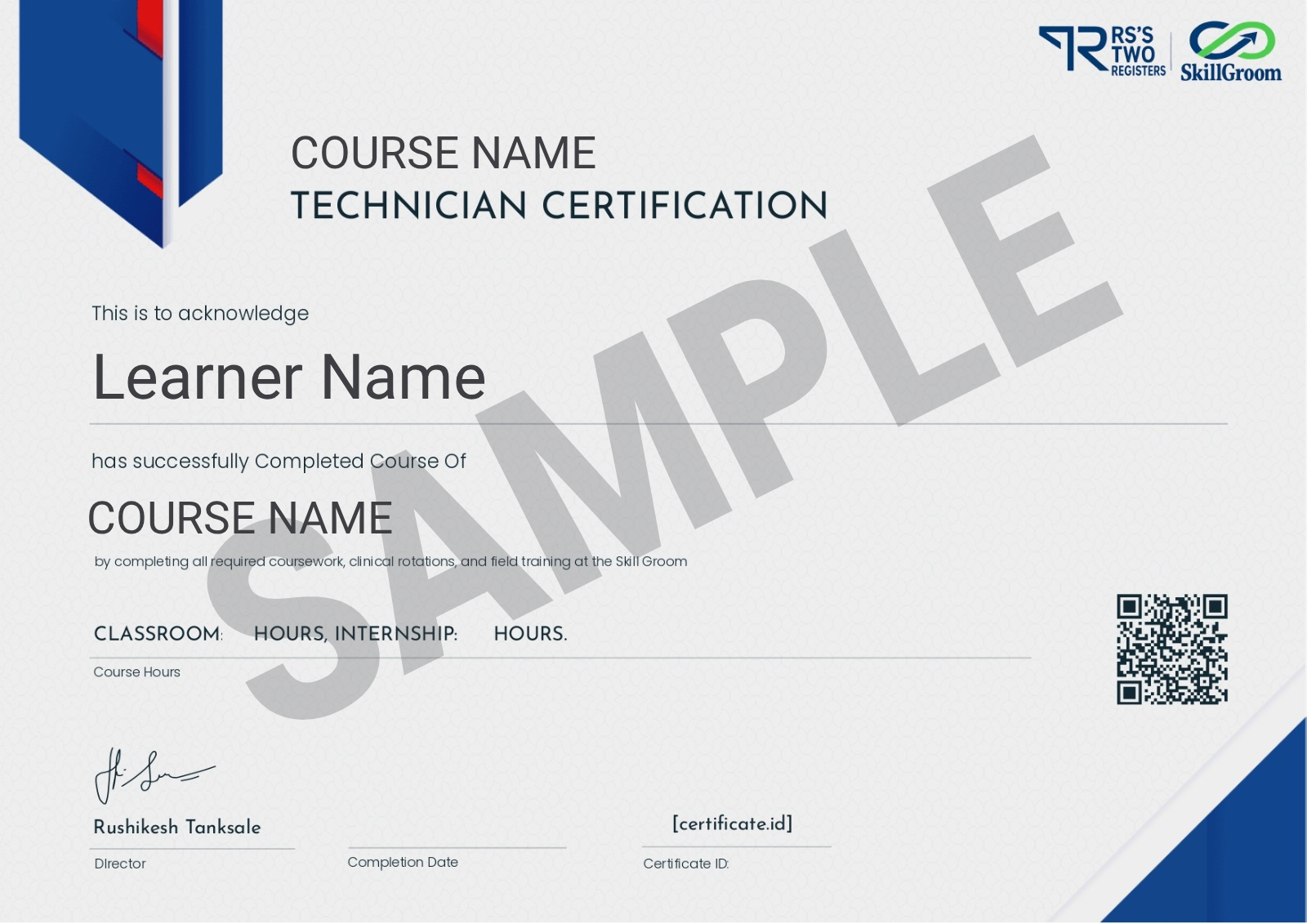
Credits may be awarded as per applicable UGC NEP 2020 guidelines. In addition, your internship certificate will be issued after report approval, evaluation completion, and uploading of the required organization certificate.
Thereafter, learners can download the internship completion certificate directly from the LMS.
After completing the Generative AI in IoT course, learners will be ready to design, develop, and manage AI-powered IoT ecosystems that can predict, optimize, and evolve in real time.
In addition, participants will understand how Generative AI supports smart automation, predictive maintenance, edge intelligence, digital twins, anomaly detection, and IoT security.
Overall, this course prepares learners to lead next-generation projects in smart infrastructure, intelligent connectivity, automation, and AI-driven digital transformation.
Explore Internship Courses – Benefits and Offerings to understand how SkillGroom programs support practical learning, project submission, certification, and career-focused development.
Also, learners can browse related GenAI internship courses to build wider expertise in finance, marketing, HR, operations, data science, IoT, cybersecurity, and AI foundations.
Finally, choose the course that best matches your career goals and begin building practical skills for the future of IoT and intelligent systems.